
The most unforgettable outdoor celebrations aren’t defined by the rolling hills alone, but by the invisible infrastructure that keeps the champagne chilled and the street food sizzling. Planning catering for field weddings in the British countryside is an evocative dream; however, the reality of managing power, water, and heavy vehicle access can quickly become a source of anxiety. You want your guests to remember the incredible flavour of the hog roast, not the sound of a failing generator or the sight of a catering van stuck in a muddy gateway.
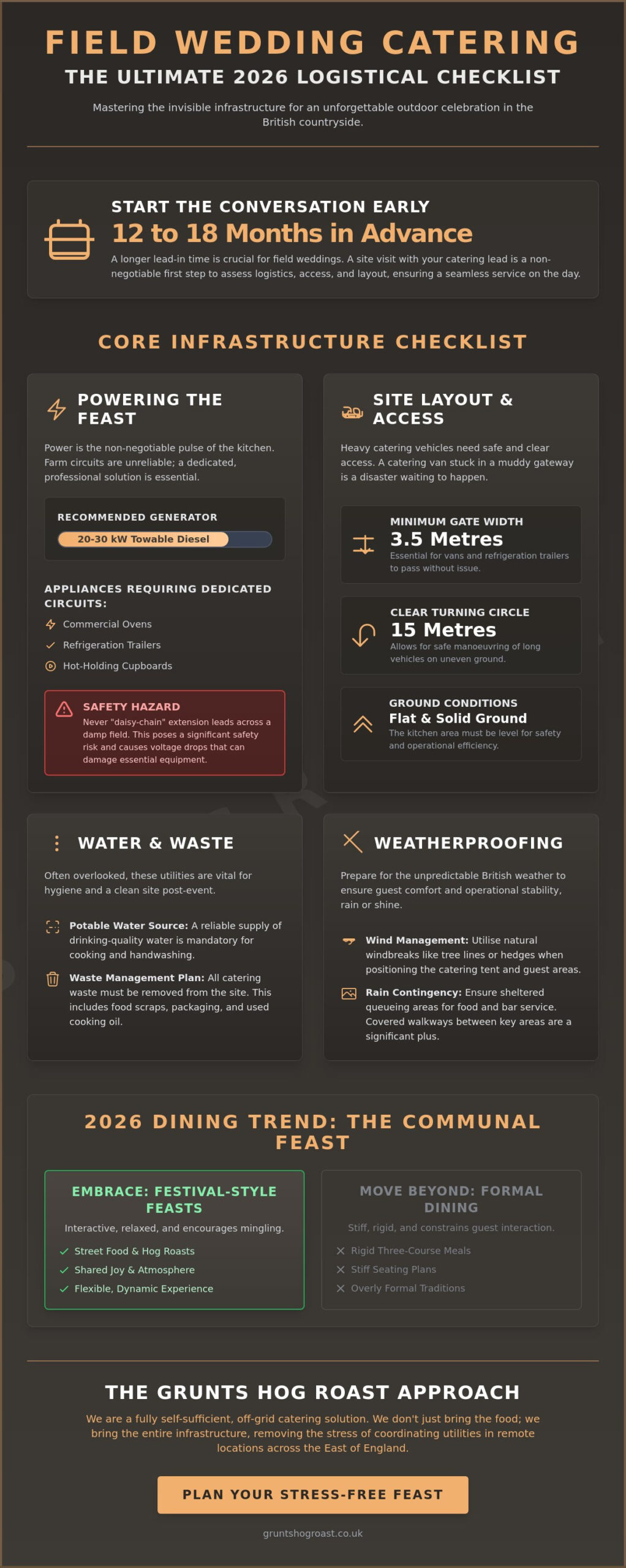
We understand that logistical confidence is the foundation of every successful event. This guide provides the ultimate 2026 checklist to help you master outdoor dining, offering a clear set of requirements to share with your landowner. Whether you are navigating the need for a 20-30 kW towable generator or preparing for the unpredictable British weather, we’ll ensure your planning process remains entirely stress-free. You will gain the certainty that every dish arrives hot and every detail is organised with professional precision, leaving you free to enjoy the magic of your day.
Key Takeaways
- Embrace the 2026 trend for festival-style sharing feasts to create a communal atmosphere that moves beyond the traditional three-course meal.
- Master the technical side of catering for field weddings by learning how to calculate kVA power loads and manage potable water in rural environments.
- Prepare your site for success by identifying the specific gate widths and turning circles required for heavy catering vehicles to navigate the terrain safely.
- Ensure guest comfort with proactive weatherproofing strategies that address wind management and provide sheltered queueing areas for rain contingencies.
- Discover how a self-sufficient, off-grid catering approach removes the stress of coordinating local utilities in remote locations across the East of England.
Understanding the Logistics of Catering for Field Weddings
A rolling pasture in the heart of the British countryside offers a sense of freedom that no hotel ballroom can replicate. This “blank canvas” allows you to curate every detail, from the position of the marquee to the orientation of the sunset views. However, this freedom brings a unique set of challenges that differ significantly from venue-based events. Successfully executing a celebration in a remote location requires a deep understanding of event management logistics; every element from power to waste disposal must be imported to the site.
Catering for field weddings involves more than just preparing a menu. It’s about building a functional, safe, and efficient kitchen in the middle of nowhere. In 2026, the trend has shifted away from rigid, formal dining toward a more communal experience. Couples now prioritise the atmosphere and the shared joy of a feast over the stiff traditions of the past. To achieve this, your catering team must be entirely self-sufficient, especially in remote Essex locations where local utilities are often non-existent. We don’t just bring the food; we bring the infrastructure required to serve it at its peak.
The “Blank Canvas” Challenge
Field weddings require a longer lead-in time than standard venue bookings. We recommend starting the logistical conversation at least 12 to 18 months in advance to ensure every detail is organised. A site visit with your catering lead is a non-negotiable step early in the planning process. We need to identify the “service centre” of your field. This is the strategic point where the kitchen, guest seating, and bar intersect to ensure a smooth flow of service. Without this early assessment, you risk placing the kitchen too far from the guests, which leads to lukewarm food and disconnected staff. We look for flat ground, solid access routes, and natural windbreaks to keep the operation running perfectly.
Choosing Your Menu Style
In 2026, we’re seeing a definitive move toward interactive dining. Choosing wedding street food catering creates a relaxed, festival-style vibe that encourages guests to mingle whilst they eat. It’s a vibrant way to serve high-quality ingredients without the constraints of a rigid seating plan. For larger groups, a traditional hog roast remains a favourite choice amongst our clients. It provides a spectacular visual centrepiece and feeds a crowd efficiently in an open-air setting. The key is balancing “gourmet” expectations with the practicalities of the site. We focus on menus that maintain their integrity in an outdoor environment, ensuring every bite is as delicious as it would be in a professional restaurant kitchen.
Infrastructure Checklist: Power, Water, and Waste
The success of catering for field weddings relies on the invisible infrastructure hidden beneath the bunting and fairy lights. Whilst the setting is romantic, the operational requirements are strictly technical. You cannot expect a professional kitchen to function on a single domestic plug socket trailed from a nearby barn. When preparing your site, consulting an outdoor catering preparation checklist can provide a structured framework for equipment and hygiene standards. We prioritise logistical transparency to ensure your day runs without a single flicker of power or a drop in water pressure.
Powering the Feast
Power is the pulse of the kitchen. Without it, the service stops. We strongly recommend using a 20-30 kW towable diesel generator rather than tapping into an existing farm supply. Farm circuits are often unreliable and prone to tripping when multiple high-draw appliances engage simultaneously. You must avoid “daisy-chaining” extension leads across a damp field; this is a significant safety hazard and leads to voltage drops that can damage refrigeration units. If you are planning a celebration in the East of England, our team can guide you through these technicalities as part of our wedding catering service. Certain appliances require dedicated circuits to function safely:
- Commercial Ovens: High-energy draw for consistent roasting temperatures.
- Refrigeration Trailers: Essential for keeping ingredients at safe, chilled levels.
- Hot-Holding Cupboards: These ensure your food is served at the perfect temperature.
- Water Boilers: Vital for tea, coffee, and essential hygiene.
Water and Hygiene Standards
Water is often overlooked until the taps run dry. A catering team serving 100 guests typically requires 200 to 300 litres of potable water for cooking and cleaning. This must be drinking-quality water, not simply a garden hose from a rain butt. We also require a dedicated hand-washing station in the “back of house” area to maintain strict health and safety standards. Hygiene is non-negotiable in a field environment.
Waste management is equally critical for a modern, eco-conscious wedding. We operate a strict “Leave No Trace” policy to protect the land. Food waste and packaging must be secured immediately in lidded bins to avoid attracting local wildlife or creating litter in the breeze. Finally, don’t forget to light the service area. Whilst you want a soft “vibe” for the guests, our team needs bright, clear task lighting to plate up your meal with precision and safety once the sun sets over the field.
Site Layout and Access: Navigating the Terrain
The visual appeal of a wildflower meadow is undeniable; however, the physical reality of moving three tonnes of catering equipment across it requires meticulous planning. Whilst the previous sections addressed the invisible needs of power and water, the physical layout of your site determines how efficiently your guests are fed. A successful “Guest Journey” relies on positioning the food stations to avoid bottlenecks, ensuring the flow moves naturally from the ceremony area to the marquee without guests tripping over hidden cables or uneven turf.
Terrain assessment is the first step in this process. Identifying flat ground for the kitchen setup is essential; slopes are the enemy of hot oil, heavy ovens, and stable service hatches. When catering for field weddings, we look for a “service spine” that keeps the heavy lifting out of sight whilst remaining close enough to the marquee to ensure food arrives at the table within seconds of being plated. For a deeper look at site selection and land preparation, consulting a logistical guide to planning an outdoor wedding can help you identify potential red flags before they become expensive problems on the day.
Getting the Vans in Place
Logistics begin at the farm gate. Most professional catering trailers require a minimum gate width of 3.5 metres and a turning circle of at least 15 metres to navigate safely. Don’t assume a standard farm track is sufficient; heavy rainfall can turn a dirt path into an impassable bog in hours. We always recommend a “Wet Weather” access plan, which might include hiring temporary trackway or plastic ground protection. The kitchen needs to be tucked behind the marquee or a natural screen, but it must have a clear, unobstructed path for loading and unloading. If the catering team is struggling to move through mud, your service schedule will inevitably slip.
The Service Area Layout
Positioning your food stations correctly turns a meal into an experience. We love creating a sense of “theatre” around the hog roast catering area, placing it where guests can enjoy the aroma and the visual spectacle without blocking the main entrance. As evening falls, the focus often shifts. Integrating loaded fries catering for events as a late-night snack station works best when it’s positioned near the dance floor or fire pit. Use the natural features of the field, such as a large oak tree or a stone wall, to “centre” the dining experience. This creates a defined space for socialising whilst keeping health and safety hazards, such as cable ramps and kitchen heat, safely partitioned from the celebration.
Weatherproofing and Guest Comfort in the Field
The British sky is as famous for its drama as its beauty. Whilst a sun-drenched paddock is the goal, your strategy for catering for field weddings must account for the gusts and showers that define our island’s weather. It’s not just about keeping the rain off the plates. You need to manage the natural environment to ensure the food stays pristine and the guests remain comfortable, regardless of what the forecast decides. Rain is inevitable. Our plan isn’t.
Wind management is often the most overlooked factor in rural settings. High winds can turn a professional gazebo into a kite and, more importantly, can drive smoke from your cooking stations directly into the guest marquee. We proactively assess the wind direction on the day, positioning our equipment to ensure that the delicious aromas of the feast don’t become an overwhelming cloud for your seated guests. Temperature control is equally vital. We use high-grade hot-holding equipment to ensure your meal stays piping hot, even when served in a breezy, open-sided structure. Additionally, we manage natural elements like dust and insects by using sealed containers and protective covers, keeping every ingredient pristine until it reaches the plate.
The Plan B Kitchen
A caterer’s “Plan B” isn’t just a backup; it’s a necessity. We bring our own dedicated, heavy-duty shelters to ensure the team has a dry, stable area to plate and prep your food. Extreme heat is also a logistical hurdle. In peak summer, refrigeration units must work significantly harder to maintain safe temperatures. We monitor these systems constantly to ensure food safety standards never waver, providing a self-sufficient kitchen that functions perfectly in a heatwave or a downpour. This professional preparedness ensures that service staff always have a dry, safe environment to deliver a flawless meal.
Guest Comfort Essentials
Positioning is everything. When you choose mobile BBQ hire, we place the chef to provide a sense of warmth and theatre without compromising the air quality of your shared spaces. We also suggest street food or grazing options that allow guests to eat comfortably under cover if the weather turns. As night falls, we prioritise lighting the path to the food zone. This creates a safe, inviting route for your evening guests to discover their late-night snacks whilst maintaining the celebratory vibe of the field. Ready to plan a weather-proof feast? Contact our expert team to discuss your 2026 field wedding logistics today.
The Grunts Hog Roast Approach: Self-Sufficient Field Catering
We don’t just show up to your venue; we arrive with a fully realised mobile infrastructure. Specialising in catering for field weddings across Essex and the East of England means Grunts Hog Roast has encountered every type of terrain, from coastal paddocks to secluded woodland clearings. Our approach is built on the foundation of being a self-sufficient partner. We bring the professional-grade ovens, the silent power, and the technical expertise required to operate entirely off-grid. This independence builds deep trust. It removes the burden of logistical coordination from you and the landowner.
Dietary requirements shouldn’t be a compromise just because you’re in a remote field. Grunts Hog Roast treats allergens and specific food preferences with the same rigour as a fixed-site restaurant. Our mobile kitchens are designed to prevent cross-contamination. This ensures that every guest enjoys the same high standard of service. Whether it’s a gluten-free hog roast or a vegan street food alternative, we manage the details with professional polish and operational precision.
Grunts Hog Roast: Expertise in the East of England
Our team understands the unique dynamics of local Essex venues and private estates. We know that a field wedding can feel like organised chaos if not managed correctly. Grunts Hog Roast takes it upon ourselves to coordinate the flow of the kitchen area so you don’t have to. This allows you to focus on the celebration whilst we handle the behind-the-scenes precision. As a family-owned and operated business, we combine traditional professional standards with a modern, flexible attitude. We adapt to your specific theme and the physical space available, ensuring the “vibe” is exactly as you imagined.
Tailoring the Experience
From the spectacle of a traditional hog roast to the vibrant energy of our street food menu, Grunts Hog Roast curates the atmosphere of your dining space. We don’t offer DIY machine hire. This is a deliberate choice. It ensures 100% quality control on-site; our chefs are there to guarantee every dish is served hot and on time. We bring everything needed to function autonomously, which builds a sense of reliability and ease for the client. The next step is simple. Book a site visit with us so we can assess your land and begin finalising your 2026 menu. Plan your field wedding catering with Grunts Hog Roast today and let us turn your outdoor vision into a flawless reality.
Secure Your Flawless Outdoor Feast for 2026
The dream of a British field wedding is within reach once you’ve mastered the invisible infrastructure that supports it. By prioritising reliable power, assessing your site’s physical access, and preparing for the whims of the weather, you transform a simple paddock into a high-end dining destination. Professional catering for field weddings isn’t just about the food; it’s about the confidence that every logistical detail is handled with precision. You deserve a celebration where the only surprise is how incredible the street food tastes.
Success depends on choosing partners who treat your “blank canvas” as a professional workspace. As a family-owned and operated business, we pride ourselves on our full-service self-sufficiency. We bring years of expertise in off-grid Essex locations, ensuring that your menu is served hot and your guests remain comfortable regardless of the forecast. Get a Quote for Your 2026 Field Wedding Catering today and let us handle the technicalities whilst you focus on making memories. Your perfect outdoor feast is just a site visit away, and we can’t wait to help you build it.
Frequently Asked Questions
Do I need to provide a kitchen tent for the caterers at a field wedding?
No, you don’t need to provide a kitchen tent. We bring our own professional, heavy-duty shelters to ensure a dry and safe environment for all food preparation and plating. This independence is a core part of our self-sufficient approach, allowing us to set up a functional kitchen in almost any location without relying on your marquee supplier for extra space or cover.
What happens if it rains during the outdoor food service?
Rain won’t stop the service. We operate from weatherproof gazebos that keep the cooking and plating areas entirely dry, ensuring the food remains pristine. For guest comfort, we recommend positioning the service hatch close to the marquee entrance or providing a covered walkway so your friends and family don’t get wet whilst waiting for their favourite dishes.
How much power does a professional hog roast caterer need?
A professional setup typically requires a 20-30 kW towable diesel generator. This provides the necessary kVA to run commercial ovens, refrigeration units, and hot-holding cupboards simultaneously without the risk of tripping. We calculate the specific electrical load during the planning phase to ensure the power supply is robust and reliable throughout your entire event.
Can you cater for vegan and gluten-free guests in a field?
Yes, we accommodate all dietary requirements with the same rigour as a fixed-site restaurant. Whether your guests need vegan street food or gluten-free hog roast options, we manage these needs as a standard part of our service. We use dedicated equipment and strict protocols to prevent cross-contamination, even when catering for field weddings in the most remote locations.
How far in advance should I book catering for a field wedding in Essex?
We recommend booking at least 12 to 18 months in advance to secure your preferred date. Field celebrations are logistically complex and require significant lead-in time for site visits and equipment coordination. Booking early allows us to properly organise the “invisible infrastructure” and ensures every technical detail is settled well before the big day arrives.
Do caterers need access to running water on-site?
We require potable water, but we can bring our own supply if your site is truly off-grid. For an event with 100 guests, we typically need 200 to 300 litres for cooking and essential hygiene. If there isn’t a drinking-water tap available on-site, we’ll arrange for water bowsers to be part of our self-sufficient setup to ensure standards are met.
What is the minimum gate width required for a catering van?
The minimum gate width required is 3.5 metres. This allows our heavy catering trailers and support vehicles to enter the site safely without damaging gateposts or local hedges. We also require a turning circle of approximately 15 metres to ensure our team can navigate the terrain and position the kitchen unit exactly where it’s needed for the best service flow.
Do you provide bins and waste removal for the food packaging?
Yes, we provide lidded bins for our own food packaging and operate a strict “Leave No Trace” policy. We take all catering-related waste away with us at the end of the night, ensuring the field is left in pristine condition. This removes the burden of waste management from you and ensures the land is respected and protected.

