
The legendary, glass-like crackling might be the star of the show, but the real secret to a perfect plate lies in the complex textures hidden beneath that golden crust. It’s a common feeling to stand in line at a celebration, captivated by the aroma, yet feeling a touch of anxiety about which portion will end up on your roll. You shouldn’t have to worry about receiving a dry or underwhelming serving when the spectacle of the spit promises so much more. Identifying the best cuts from a hog roast is the key to ensuring every bite is as succulent and flavourful as you imagined.
In this guide, we’ll help you navigate the carving board with the confidence of a professional host. You will discover the distinct differences between the marbled richness of the shoulder, the lean tenderness of the loin, and the robust character of the leg. We’ll show you how to pick your personal favourite based on your preference for texture and depth of flavour, whilst revealing the expert techniques that create perfect crackling. By the time you’ve finished reading, you’ll know exactly how to ask for the most prized morsels at your next event.
Key Takeaways
- Learn how to identify the best cuts from a hog roast based on your personal preference for rich, succulent marbling or lean, clean tenderness.
- Understand the functional differences between the shoulder, loin, and leg to ensure you always receive a portion that suits your palate.
- Uncover the “hidden gems” of the pig, such as the tender cheeks and intensely flavourful jowl, which are often the most prized bites on the spit.
- Discover the professional secrets to achieving the perfect, glass-like crackling that serves as the crown jewel of any traditional roast.
- Learn how to communicate with your carver to avoid the fear of dry meat and secure the most sought-after sections of the animal.
What Makes the Best Cuts from a Hog Roast So Special?
A traditional hog roast is far more than a simple meal; it’s a sensory experience that has been a focal point of celebrations for centuries. Unlike a standard kitchen oven roast, a whole pig on a spit cooks in its own natural juices. This creates a depth of flavour that is impossible to replicate with individual supermarket joints. Whilst a single joint offers a uniform texture, a whole hog provides a diverse landscape of tastes and textures. The history of hog roasting shows that this method has always been about communal dining and the shared anticipation of the feast. Identifying the best cuts from a hog roast requires an understanding of how the heat, smoke, and fat interact over several hours to transform the meat.
The “best” cut isn’t a single point on the pig. It’s a balance. You are looking for the perfect intersection of moisture, fat rendering, and smoke infusion. This variety is what makes a whole-roasted pig so superior to smaller, pre-cut portions. Every part of the animal reacts differently to the flame, meaning one guest might enjoy a lean, delicate slice whilst another indulges in a rich, fatty portion that has been basting for hours.
The Science of Slow-Roasted Flavour
Success depends on patience. We typically roast our pigs for six to eight hours, allowing the low, consistent heat to work its magic on the connective tissues. This slow process breaks down tough collagen into succulent gelatin. It’s this transformation that gives the meat its signature melt-in-the-mouth quality. As the spit rotates, the pig undergoes a process of “basting from within.” The internal fat renders slowly, trickling through the meat to keep it moist and infused with flavour. Our professional roasting machines ensure the heat is distributed evenly. This prevents the meat from drying out whilst developing that distinctive, savoury aroma that fills the air at any event.
Texture vs. Flavour: What Are You Looking For?
Choosing your portion is a matter of personal preference. There is a clear trade-off between different areas of the pig. Some guests gravitate towards the lean, elegant slices of the loin, which offer a clean bite and subtle flavour. Others prefer the rich, marbled intensity of the shoulder, which is the gold standard for those who love “pulled” textures. The best cuts from a hog roast are often those that have absorbed the most seasoning from our bespoke rubs. We apply these generously to enhance the natural sweetness of the pork.
When deciding on your plate, consider these three elements:
- Moisture: The result of internal basting during rotation.
- Fat Rendering: Creating a silky mouthfeel in the richer cuts.
- Smoke Infusion: The hallmark of a true spit roast.
The Big Three: Exploring Shoulder, Loin, and Leg
While the whole animal is a spectacle, the majority of your guests will be served from three primary areas. Understanding these is essential for anyone looking for the best cuts from a hog roast. Each section offers a different ratio of fat to lean meat, which significantly impacts the eating experience. For a deeper look at the anatomy, this guide to pork cuts provides an excellent breakdown of where these sections sit on the animal. Beyond these three, the belly remains the most decadent choice, offering alternating layers of succulent fat and sweet meat that melt during the slow-cooking process.
Pork Shoulder: The Crowd Favourite
The shoulder is arguably the most popular part of the pig at any event. It contains a high amount of connective tissue and collagen. During our long roasting process, this collagen melts into a rich, sticky gelatin that keeps the meat incredibly succulent. It’s this specific property that allows the meat to be “pulled” or shredded with ease. If you’re serving traditional hog roast buns with apple sauce and stuffing, the shoulder is usually the first part of the pig to be finished. Its deep, marbled flavour makes it a top choice for guests.
Pork Loin: Lean and Refined
The loin runs along the top of the pig’s back. It’s the leanest and most elegant portion available. Because it’s a muscle that doesn’t do as much heavy lifting as the shoulder or leg, it remains naturally tender. We take great care with the loin; it requires precise temperature control to ensure it stays moist. This cut is perfect for guests who prefer a cleaner, more refined bite without heavy marbling. It’s often the preferred choice for formal wedding breakfasts where guests are eating with a knife and fork.
The Leg: Traditional and Robust
The leg is often considered one of the best cuts from a hog roast for those who enjoy a traditional, meaty texture. It’s leaner than the shoulder but has a firmer “bite” than the delicate loin. This versatility makes it a fantastic all-rounder. We can carve it into thick, satisfying slices or lightly pull it to mix with other sections. From a logistical perspective, the leg is vital for large gatherings. It provides a very consistent meat-to-guest ratio, ensuring that everyone in a long queue receives a high-quality, filling portion.
If you’re planning a celebration and want to ensure your guests experience the full variety of these textures, our Traditional Hog Roast service is designed to showcase every one of these premium sections. We handle the complexities of the cook so you can focus on the atmosphere of your event.
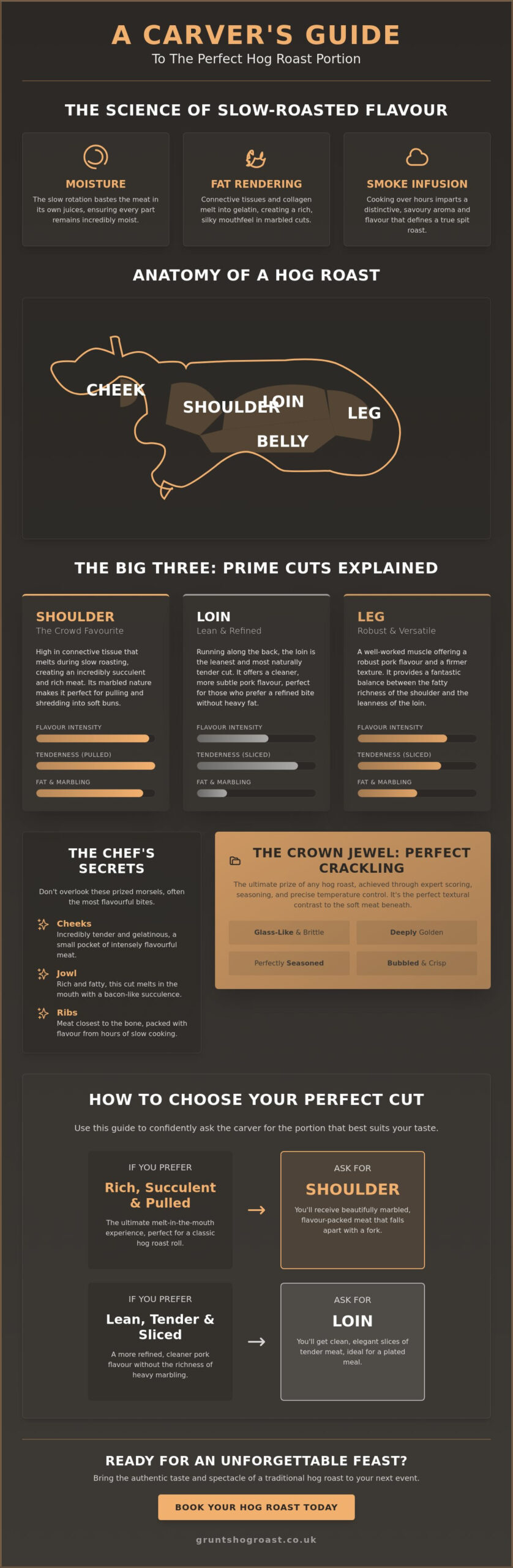
The Chef’s Secrets: Cheeks, Jowl, and Ribs
Whilst the shoulder and loin provide the bulk of the meat for your guests, the true enthusiasts amongst the crowd will be looking for the smaller, more concentrated portions. These are the parts that often get missed in clinical butchery guides, yet they represent some of the best cuts from a hog roast. These “hidden gems” are where the most intense flavour resides. They spend hours absorbing heat and seasoning in the most protected parts of the animal, resulting in a depth of taste that larger joints simply cannot match. Seeking out these morsels is what separates a casual diner from a true connoisseur of the spit.
Why the Cheeks are the Ultimate Prize
The cheeks are often considered the holy grail of pork. Because they are a hard-working muscle used for chewing, they are naturally lean but packed with deep, complex flavour. Our long roasting process allows these tough fibres to break down completely. This results in a “melt-away” texture that is unlike any other part of the pig. They become small, succulent nuggets of pure flavour. If you’re attending a roast, don’t be shy. Ask the carver specifically if any cheek meat is available. It is a limited prize, but it is certainly worth the request for those who appreciate the finer details of the feast.
Jowl and Ribs: For the Flavour Seekers
Just behind the cheeks lies the jowl. This area has a much higher fat-to-meat ratio, which makes it an incredible vessel for flavour. As the pig rotates, the jowl bastes in its own juices and the spices of our bespoke rubs. It is intensely savoury. It provides a rich, silky mouthfeel that contrasts beautifully with the leaner loin. Most guests overlook the head area, but the jowl is often what the chefs keep for themselves because of its incredible tenderness.
The ribs are another area where the cooking process creates something special. Because the meat is thin and sits directly against the bone, it absorbs the most smoke and heat during the six to eight-hour cook. This creates a sweet, “sticky” quality that rib lovers will immediately recognise. The meat near the bone is always the most tender. In a whole-hog environment, these sections become incredibly concentrated and flavourful. Finally, look for the tenderloin. This hidden muscle sits beneath the loin and remains the most tender part of the animal due to its lack of exercise. Identifying these specific areas is the secret to finding the best cuts from a hog roast and elevating your plate from a standard meal to a gourmet experience.
The Crown Jewel: Achieving the Perfect Crackling
No part of the animal is quite as iconic or as fiercely debated as the crackling. In our experience catering across Essex, this is consistently the most requested “cut” of the entire feast. Whilst it isn’t technically meat, many guests consider a golden, salty shard of skin to be one of the best cuts from a hog roast. Achieving that elusive, glass-like texture requires far more than just high heat. It is a meticulous professional process that begins long before the first guest arrives at the serving station. We focus on three critical pillars: precision scoring, heavy salting, and strategic heat management.
The result of this effort is a texture that snaps effortlessly under the teeth. It should be light and airy, not chewy or tough. We often hear guests ask, “Is crackling bad for you?” We believe in transparency. It is an occasional treat. It is high in flavour and richness, making it the perfect indulgence for a wedding or a milestone birthday. It provides the essential crunch that balances the succulent, soft textures of the shoulder and loin we discussed earlier.
The Art of the Score
Success starts with the score. We use incredibly sharp blades to create deep, consistent lines across the skin. This isn’t just for visual appeal, although a perfectly bronzed and blistered hog is a magnificent sight. Scoring acts as a pressure valve. It allows the internal fat to escape and baste the meat whilst simultaneously letting the intense heat of the roaster penetrate the skin. This ensures the fat underneath renders away, leaving only the crisp exterior. The best cuts from a hog roast for crackling enthusiasts are usually found along the loin and the sides, where the skin is thinner and the fat layer is most uniform.
Managing Crackling for a Crowd
Serving perfect crackling to over a hundred people at once is a logistical challenge. If the skin is left on the meat whilst it is being carved, the rising steam can turn it soggy within minutes. We prevent this by removing the crackling in large sheets once the cook is complete. Our carvers then “shatter” it into manageable pieces for easy serving. This technique ensures that the first person in the queue and the last person both enjoy the same satisfying crunch. Understanding the care that goes into this process helps explain our Hog Roast Catering Prices, as you are paying for the specialist expertise required to deliver quality across every part of the pig.
If you want to guarantee your guests experience the ultimate gold standard of crackling, our Traditional Hog Roast service provides the professional equipment and skill needed to make it happen.
From Carving to Plate: How Your Choice Impacts the Event
Your choice of meat defines the atmosphere of your gathering. It isn’t just about food; it’s about the “vibe” you want to create for your guests. A professional carver acts as an essential guide during this process. They don’t just slice meat. They interpret each guest’s preferences and ensure the plate matches their expectations. Whether someone wants a lean portion or a rich, fatty morsel, the carver knows exactly where to find the best cuts from a hog roast on the spit. This interaction removes the stress of the “unknown” for your guests, making the serving line an engaging part of the event rather than a logistical hurdle.
Grunts Hog Roast organises the service to ensure everyone gets a balanced mix of textures. We don’t just serve what’s easiest to reach. Instead, we carefully manage the pig to ensure that the prized sections, like the cheeks and tenderloin mentioned earlier, are distributed fairly. This methodical approach ensures that even the last guest in line receives a succulent, flavourful serving that hasn’t been sitting in a tray for hours.
Casual Street Food Style
For a relaxed, celebratory feel, we often recommend focusing on the shoulder and belly. These are the undisputed kings of the loaded bun. The high fat content and “pulled” texture make them incredibly approachable for guests standing and socialising. By mixing these different sections, our carvers create a “signature” sandwich that combines the crunch of crackling with the deep, rendered softness of the meat. If you’re looking for a contemporary twist on this tradition, you might consider our Loaded Fries Catering for Events. This service uses these same succulent portions to top crispy, golden chips, offering a modern street-food experience that younger guests particularly enjoy.
Formal Wedding Breakfasts
Sit-down events require a different approach. For a plated wedding breakfast in Essex, the loin and leg provide the necessary elegance. These leaner cuts hold their shape beautifully when carved into uniform, professional slices. They pair perfectly with traditional accompaniments like sharp, locally made apple sauce and savoury sage and onion stuffing. This level of detail is a core part of our Wedding Catering Essex service. We work with you to plan a menu that balances the rustic charm of a roast with the sophistication of a formal meal.
Everything starts with the animal. We prioritise using high-quality, locally sourced pigs for every event. A pig that has been well-raised produces better fat marbling and more tender muscle fibres. This is the foundation of a successful roast. Without a premium pig, even the most skilled carver cannot find the best cuts from a hog roast. We bring everything needed to function autonomously, allowing you to enjoy the celebratory warmth of the occasion whilst we handle the logistical details with confidence.
Plan Your Perfect Feast
Selecting the best cuts from a hog roast transforms a simple meal into a memorable centrepiece for your guests. We have explored how the rich marbling of the shoulder creates the perfect pulled pork, whilst the lean elegance of the loin provides a sophisticated choice for formal dining. Don’t forget those hidden treasures like the tender cheeks that offer a concentrated burst of flavour for the true enthusiasts amongst your crowd.
Our professional carvers understand the anatomy of the animal and know exactly how to guide your guests to their perfect portion. We use locally sourced Essex pork to ensure maximum freshness and quality in every bite. Our team arrives with a fully self-sufficient mobile setup; this means we can deliver this exceptional experience at any venue without needing your assistance for power or water. We take care of the logistics so you can enjoy the celebration.
If you are ready to elevate your celebration with a feast that perfectly balances texture and taste, enquire about a Grunts Hog Roast for your next Essex event. We look forward to helping you create an unforgettable atmosphere for your guests.
Frequently Asked Questions
What is the most tender part of a hog roast?
The tenderloin and the cheeks are the most tender portions of the animal. The tenderloin is a protected muscle that does very little work, resulting in a delicate, lean texture. Similarly, the cheeks become incredibly succulent because the long roasting process completely breaks down their complex fibres. Whilst the shoulder is famous for its soft, shredded quality, these two specific areas are the ultimate choice for guests seeking the softest bite.
Is hog roast meat healthy compared to other catering options?
Pork is an excellent source of high-quality protein and is often more natural than processed catering alternatives. During the spit-roasting process, a significant amount of fat renders away from the meat as it rotates for several hours. This leaves you with succulent, lean protein. If you choose the loin or leg, you are receiving a very lean meal. It is also naturally gluten-free, which makes it a safe and inclusive option for many guests.
Can I ask for specific cuts at a hog roast event?
You should definitely communicate your preferences to the professional carver at the serving station. They are experts at identifying the best cuts from a hog roast and can plate up your favourite part with ease. Whether you prefer the rich, marbled texture of the shoulder or a cleaner slice of loin, just ask. Our team enjoys guiding guests through the different textures to ensure everyone leaves with a plate they truly enjoy.
Why is the crackling sometimes better on certain parts of the pig?
Crackling quality depends on the thickness of the skin and the layer of fat underneath. The loin and side areas typically produce the most consistent, glass-like crackling because the skin is thinner and the fat renders more evenly there. In contrast, the skin over the shoulders can be thicker. This requires more intense heat to crisp up, which is why a professional roasting machine is essential for achieving a perfect crunch across the entire animal.
How much meat should I expect per person from a whole hog?
We typically calculate between 100g and 150g of cooked meat per person for a standard hog roast bun. This provides a generous, filling portion that satisfies most guests at a casual event. If you are planning a formal sit-down meal, we often increase this allocation to account for larger plated servings. We always ensure there is enough to cover your guest count, including a few “seconds” for those who want to try different sections.
What happens to the “less popular” cuts during a professional roast?
No part of a high-quality pig goes to waste during a professional roast. The less famous areas are often shredded and mixed with the shoulder meat to add moisture and variety to the serving trays. This creates the complex blend of textures that defines a great hog roast sandwich. Any remaining meat is typically offered to the host at the end of the service or can be used for loaded fries later in the evening.
Is the meat from the head of the pig safe and tasty to eat?
Meat from the head area is completely safe and is widely considered a delicacy by culinary enthusiasts. The cheeks and jowl are some of the best cuts from a hog roast due to their intense flavour and incredible tenderness. Because these muscles are protected during the cook, they do not dry out. They offer a rich, savoury experience that is much more concentrated than the larger muscles found on the rest of the body.
Does the breed of the pig affect the quality of the cuts?
The breed significantly impacts the final texture and flavour of the meat. Traditional breeds often have a higher fat-to-meat ratio and better internal marbling. This intramuscular fat is what keeps the meat succulent during a long six to eight-hour roast. We prioritise locally sourced pigs because their welfare and breeding history directly result in a superior product. A well-raised pig ensures that every cut on the plate is of the highest possible standard.

