
With event catering inflation rising by 10.5% since 2023, the pressure to deliver a flawless experience without breaking the budget has never been higher. You want your guests to remember the golden sunset over the Essex fields and the evocative aroma of a traditional hog roast, not the hum of a failing generator or the disappointment of lukewarm food. It’s completely natural to feel anxious about the logistics of catering for outdoor events Essex, especially when you’re managing complex dietary requirements in the middle of a field. You deserve to be a guest at your own celebration, not a stressed site manager.
We’re here to help you master the art of the outdoor menu whilst ensuring your setup is legally compliant and entirely self-sufficient. This guide provides the ultimate roadmap for 2026, covering everything from mandatory fire risk assessments to the latest trends in global street food and loaded fries. We will show you how to secure a professional service that arrives with its own power and water, leaving you with zero cleanup and total confidence. Let’s transform your logistical hurdles into a seamless, celebratory dining experience that truly wows your guests.
Key Takeaways
- Conduct a thorough site survey to assess ground stability and access, ensuring your catering unit remains level and secure throughout the celebration.
- Discover why high-volume options like the street food menu or a traditional hog roast often outperform formal sit-down meals by maintaining consistent heat and quality amongst the elements.
- Streamline your planning for catering for outdoor events Essex by choosing self-sufficient providers to eliminate the hidden costs of generator hire and temporary water connections.
- Master weatherproofing techniques to protect your feast, using professional gazebos and trailers to keep your menu served at the perfect temperature regardless of the wind or rain.
- Learn how to build a comprehensive “Event Brief” to receive transparent quotes that include everything from staff and travel to eco-friendly disposables.
Assessing Your Essex Venue for Outdoor Catering Success
Choosing a stunning Essex meadow or a coastal garden is the first step toward an unforgettable gathering, but the beauty of the backdrop must be matched by the practicality of the terrain. A site survey isn’t just a tick-box exercise; it’s the most critical stage of your planning process. Without it, even the most exquisite menu faces hurdles that can disrupt the rhythm of your day. Successful catering for outdoor events Essex relies on a caterer who understands how to transform a raw space into a high-functioning kitchen. This level of comprehensive event management ensures that every logistical variable, from site selection to vendor coordination, is accounted for before the first guest arrives.
Site Access and Ground Suitability
Mobile kitchens and trailers are heavy pieces of equipment. They require firm, level ground to operate safely. If the ground is soft after rain, heavy units can sink, creating a tilting service window and potential safety risks. Always identify a “hard-standing” area or use ground protection mats if the Essex weather has been particularly damp. Consider these non-negotiables during your walkthrough:
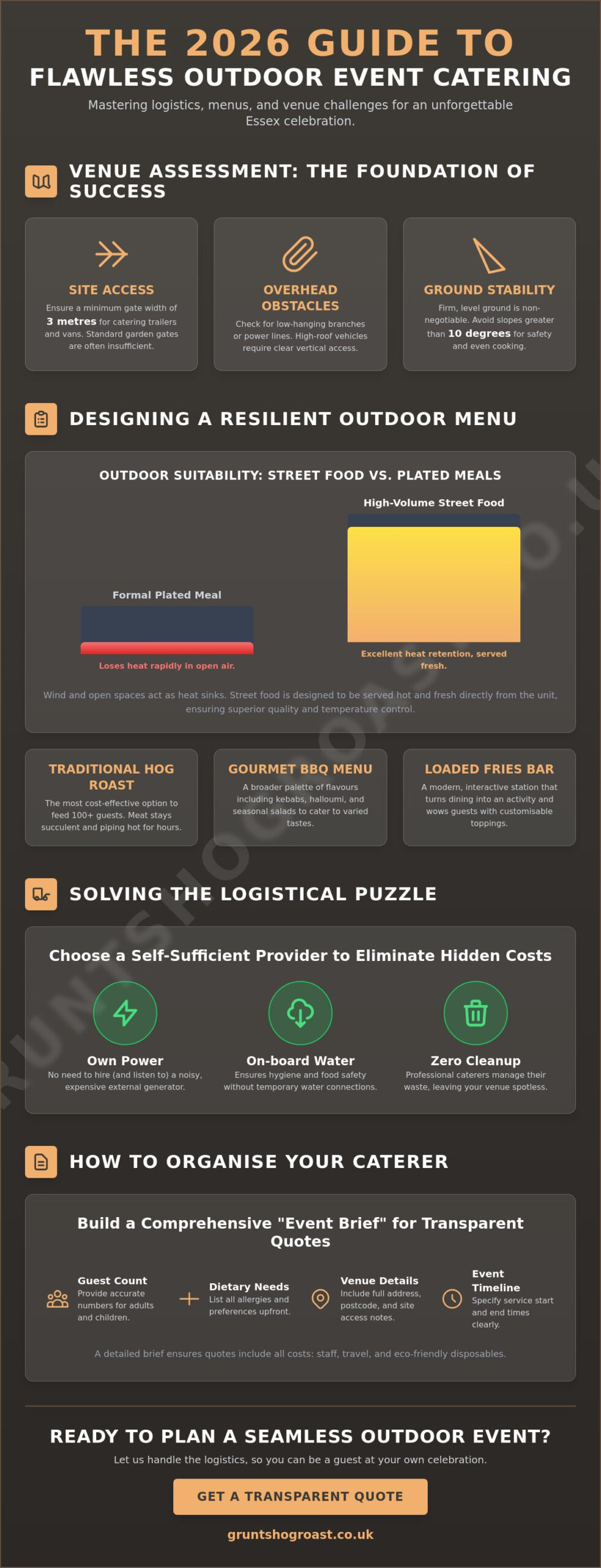
- Gate widths: Ensure a minimum of 3 metres for trailer access. Standard garden gates are often too narrow for professional street food trailers.
- Overhead obstacles: Check for low-hanging branches or power cables that might block high-roof vans.
- Ground gradient: Never attempt a hog roast on a slope greater than 10 degrees. Level surfaces are essential for even cooking and staff safety.
Guest Flow and Service Positioning
The placement of your food station dictates the energy of the event. You want the aroma of the BBQ menu or the sight of the traditional hog roast to entice guests without creating a bottleneck. Position the caterer within sight of the main gathering area but slightly offset from the primary walkways. This allows for a natural queue to form without blocking the path to the seating or dance floor.
Theatre matters. Guests love watching the crackle of a hog roast or the assembly of loaded fries, so use this as a focal point. If your service extends into the evening, ensure the “service centre” is well-lit. Unlit fields become hazardous for staff and guests alike once the sun sets. Your caterer should be a self-sufficient partner who brings their own lighting and power. By identifying the service centre early, you ensure that waste management and prep areas are tucked away from view but perfectly positioned for speed. This creates a professional atmosphere where the food appears seamlessly, allowing you to focus entirely on the celebration.
Designing a Menu That Thrives in the Great Outdoors
Designing a menu for catering for outdoor events Essex requires more than just choosing delicious recipes; it demands an understanding of how food behaves in the wild. Whilst a formal three-course meal has its charms, the logistical reality of the British elements often makes high-volume street food a far superior choice. Wind and open spaces act as natural heat sinks. A plated meal can lose its temperature in seconds when served in a breezy meadow. Street food is different. It’s designed for resilience, served hot and fresh directly from the unit to ensure your guests enjoy every bite exactly as intended.
The Traditional Hog Roast vs. Gourmet BBQ
The traditional hog roast is a masterclass in efficiency and atmosphere. It’s the most cost-effective way to feed 100+ guests without sacrificing quality or temperature. The slow-cooked meat stays succulent and piping hot for hours, providing a reliable anchor for any large gathering. Conversely, the BBQ menu offers a broader palette of flavours and textures. You can introduce halloumi, marinated kebabs, and vibrant seasonal salads to cater to more varied tastes. Combining the two creates a “Best of British” feast that feels both indulgent and inclusive, allowing guests to explore different textures amongst the celebratory mood.
The Rise of the Loaded Fries Bar
Interactive food stations are transforming the guest experience by turning dining into an activity. In particular, loaded fries catering for events has become the standout trend for 2026. This isn’t just about comfort food; it’s about customisation. Guests love choosing their own toppings, from slow-cooked brisket to spicy jalapeños. Because it’s served in portable, eco-friendly containers, it’s the ultimate “walk-away” food. This portability is essential for festival-style weddings or corporate garden parties where movement and socialising are the priorities.
Managing dietary requirements shouldn’t feel like a compromise. With 65% of Britons stating that a variety of cuisines enhances their experience, modern street food menus are built to be flexible. They allow you to offer gluten-free or plant-based options that are just as evocative as the main event. As the afternoon grazing transitions into the evening, your menu should evolve too. A late-night snack service keeps the energy high as the celebration continues into the night. If you’re looking for a partner to manage your catering for outdoor events Essex, exploring a professional street food service ensures every guest feels considered. By choosing dishes that are robust enough for the outdoors, you guarantee a professional food service that wows from the first bite to the last.
Solving the Logistical Puzzle: Power, Water, and Self-Sufficiency
A successful outdoor event relies on the invisible mechanics working perfectly in the background. When you’re planning catering for outdoor events Essex, the primary hurdle isn’t just the menu; it’s the level of autonomy your caterer provides. Drop-off catering might seem simpler on paper, but it often assumes you have the tables, power, and staff to manage the service yourself. Full-service, self-sufficient catering removes that burden entirely. It’s the difference between receiving a delivery and hosting a professional experience. By choosing a partner who brings their own infrastructure, you save hundreds of pounds on separate equipment hire and avoid the stress of coordinating multiple third-party vendors.
Understanding Power and Utilities
Power is the heartbeat of any remote kitchen, so understanding your KVA requirements is essential. You must know if your caterer requires a standard 13-amp domestic plug or a 16-amp industrial hookup. For weddings, silent generators are non-negotiable; you don’t want a mechanical hum competing with your speeches or the quiet moments of your ceremony. Whilst electric ovens are common, LPG (gas) cooking is often the most reliable option for remote fields. It ensures consistent heat even if a generator fails, providing a fail-safe layer to your event’s engine room.
The Importance of Self-Contained Catering
Professional units should be entirely self-contained, bringing their own fresh water supply and disposal systems. This is vital as new water connections at event sites often require 12 weeks’ notice. By choosing a provider experienced in catering for field weddings, you ensure that hand-washing and sanitisation stations are built-in. This autonomy guarantees that your Essex venue is left exactly as it was found, without you having to clear away 100 empty trays or food waste the next morning.
Logistical confidence comes from knowing your caterer is fully autonomous. They shouldn’t just show up to cook; they should arrive with a complete ecosystem of power, water, and waste management. This proactive approach reinforces their role as a reliable expert host, allowing you to focus on the celebratory atmosphere rather than the generator’s fuel level. When the food service is seamless, your guests can simply enjoy the experience, oblivious to the complex logistics that made it possible.
Weatherproofing Your Feast: Managing the British Elements
The British sky is a guest that rarely RSVPs, yet its influence on your celebration is undeniable. When you organise catering for outdoor events Essex, you aren’t just planning a menu; you’re orchestrating a performance against the elements. Whether it’s a sudden coastal breeze or a classic summer downpour, your caterer must possess the logistical confidence to pivot without missing a beat. High-quality service isn’t just about the food; it’s about the resilience of the setup. A professional mobile kitchen or a robust catering trailer provides an immediate, hard-shelled sanctuary that keeps the cooking environment controlled and the food temperature perfect, regardless of what’s happening outside.
Wind and Rain Contingencies
Wind is often more disruptive than rain. It can cool food rapidly and blow smoke directly toward your guests. To prevent this, ensure your caterer uses heavy-duty, commercial-grade pop-ups with a minimum of 30kg weights on each leg. Standard garden gazebos simply won’t suffice in an open Essex field. Position the service hatch away from the prevailing wind. This small adjustment protects the “theatre” of the cooking area and ensures guests can queue in comfort. Additionally, lidded serving trays are essential. They maintain heat whilst preventing debris or raindrops from entering the dishes. If the heavens open, a professional team will have a clear “Rainy Day” contingency, perhaps shifting from a central service point to a more sheltered “grab-and-go” style to keep everyone dry.
Food Safety in the Summer Heat
Extreme heat brings its own set of operational challenges. High-risk items like coleslaw, dairy-based sauces, or delicate salads require constant temperature monitoring. Professional caterers must use refrigerated vehicles to transport and store these items until the very moment of service. You should also be aware of “buffet creep.” This occurs when food sits out for more than two hours in the sun, leading to potential safety risks. It’s vital to discuss outdoor wedding food safety protocols with your provider to ensure they have the equipment to keep everything chilled.
Safety extends beyond the food itself. As the evening draws in, the catering area must remain a well-lit beacon. Proper lighting prevents trips and ensures staff can work efficiently in unlit fields. By anticipating these hurdles, you transform potential stress into a seamless experience. If you want to ensure your celebration remains flawless regardless of the forecast, book a caterer with proven weatherproofing expertise. This proactive approach ensures that whilst the weather might be unpredictable, your food service is anything but.
How to Organise Your Outdoor Caterer: From Quote to Service
Transforming your vision into a reality begins with a precise Event Brief. This document is the foundation of your partnership with a caterer. You must be clear about your guest count, the exact location, and the timing of service. These details are non-negotiable. Without them, a caterer cannot provide an accurate logistical plan or a transparent quote. Popular Essex wedding and event dates often book up 18 months in advance. If you have a specific summer Saturday in mind, start your search early to secure your preferred provider for catering for outdoor events Essex.
A professional quote is exhaustive. It details everything from staff costs and travel to eco-friendly disposables and VAT. Hidden costs ruin the atmosphere of a celebration. If a quote seems unusually low, check for logistical gaps. You don’t want to discover you’re responsible for generator hire just days before the event. Reliability is built on transparency, so ensure every element of the service is documented before you sign. This clarity allows the “Reliable Expert Host” persona to take over, ensuring the food service is the least of your worries on the day.
What to Ask Before You Pay a Deposit
Before committing your budget, verify the caterer’s professional standing. A 5-star food hygiene rating and a minimum of £5 million in public liability insurance are industry standards. Ask directly if they’re fully self-sufficient for power and water to avoid unexpected equipment hire costs. If you’re planning a large gathering, request a hog roast for 100 guests Essex cost-per-head breakdown. This allows you to compare value accurately whilst understanding exactly what is being served to your guests.
Final Preparations and Communication
The final two weeks are for refining, not panic. Conduct a check-in to confirm final guest numbers and any specific dietary requirements or allergies. For remote fields, provide a “What3Words” location. This ensures the team finds the exact setup spot without needing to call you mid-celebration. If you’re hosting a corporate summer party, consider the flow of the afternoon to maximise the impact of the food. Finally, designate one point of contact who is available on-site for the caterer’s arrival. This proactive coordination ensures your catering for outdoor events Essex runs seamlessly from the first setup to the final cleanup.
Ready to Host Your Flawless Essex Outdoor Feast?
Mastering catering for outdoor events Essex requires a blend of evocative menu planning and logistical precision. You now have the tools to evaluate your venue’s terrain, select a menu that withstands the elements, and ensure your provider is truly self-sufficient. By focusing on high-volume, resilient options like our street food menu or traditional hog roast, you guarantee that every guest receives a hot, professional meal regardless of the breeze or the location. The secret to a stress-free celebration lies in choosing a partner who handles the “how” so you can focus on the “why”.
With a 5-Star Food Hygiene Rating and over 15 years of experience catering Essex weddings and corporate events, we bring logistical confidence to every field and garden. Our fully self-sufficient mobile kitchens operate without the need for your power or water, removing the anxiety of hidden costs. It’s time to turn your vision into a seamless reality. Get a free, transparent quote for your Essex outdoor event today and let’s start planning. You deserve a celebration where the food is as unforgettable as the setting.
Frequently Asked Questions
Do outdoor caterers in Essex need their own power source?
Professional caterers should be entirely self-sufficient, providing their own silent generators or using LPG gas for cooking. This ensures they don’t rely on your domestic supply, which often lacks the voltage to run commercial ovens. By bringing an independent power source, the team avoids blowing fuses in your home or marquee, maintaining a seamless service throughout your event without any logistical interruptions.
How do you keep food warm during an outdoor event if it is windy?
We use industrial-grade thermal covers and lidded chafing dishes to maintain food temperature in breezy conditions. Serving directly from a sheltered trailer or a weighted gazebo also creates a physical barrier against the wind. This proactive approach ensures your menu stays piping hot, preventing the rapid cooling that often occurs when food is exposed to the elements in open Essex fields.
What happens if it rains on the day of my outdoor catering?
A robust contingency plan is essential for any outdoor celebration. Most professional units are housed in trailers or high-spec gazebos designed to withstand British downpours. If the weather turns, we can pivot to a “grab-and-go” style or adjust the service hatch positioning to keep guests dry. This flexibility is a hallmark of reliable catering for outdoor events Essex, ensuring the rain never dampens the celebratory atmosphere.
Can you provide gluten-free or vegan options at a hog roast?
Yes, we provide inclusive menus that feature plant-based alternatives and gluten-free rolls without compromising on flavour. Whilst the traditional hog roast is the centrepiece, we can supplement this with our street food menu or loaded fries to ensure every guest is considered. We take pride in being an accommodating partner, adapting our offerings to suit the diverse dietary requirements of your specific guest list.
How much space does a mobile catering van or hog roast trailer need?
A standard mobile catering van or hog roast trailer typically requires a footprint of approximately 6 metres by 3 metres. It’s also vital to ensure there is enough vertical clearance for high-roof vehicles and a wide enough turning circle for access. We recommend identifying a flat, hard-standing area during your site survey to ensure the unit remains stable and accessible for both staff and guests.
Is outdoor catering safe for guests with severe food allergies?
Yes, outdoor catering is safe for guests with severe allergies when managed by a professional team with a documented Food Safety Management System. We follow strict HACCP principles to prevent cross-contamination during preparation and service. Clear allergen labelling is provided for all dishes, from the BBQ menu to our loaded fries, giving your guests total confidence in every bite they take at your gathering.
Do I need to provide water for the catering team?
You don’t need to provide a water connection if you hire a self-sufficient catering team. We bring our own WRAS-approved water supply for hand-washing and sanitisation, as well as dedicated systems for waste water disposal. This independence is particularly important in remote Essex locations where mains water access is often unavailable or requires significant notice to connect for temporary events.
How far in advance should I book catering for an outdoor event in Essex?
We recommend booking your catering for outdoor events Essex at least 12 to 18 months in advance, especially for summer Saturdays. These peak dates are highly sought after for weddings and corporate garden parties across the county. Early booking ensures you secure your preferred menu and allows ample time for a thorough site survey and detailed logistical planning to guarantee a stress-free, professional food service.

